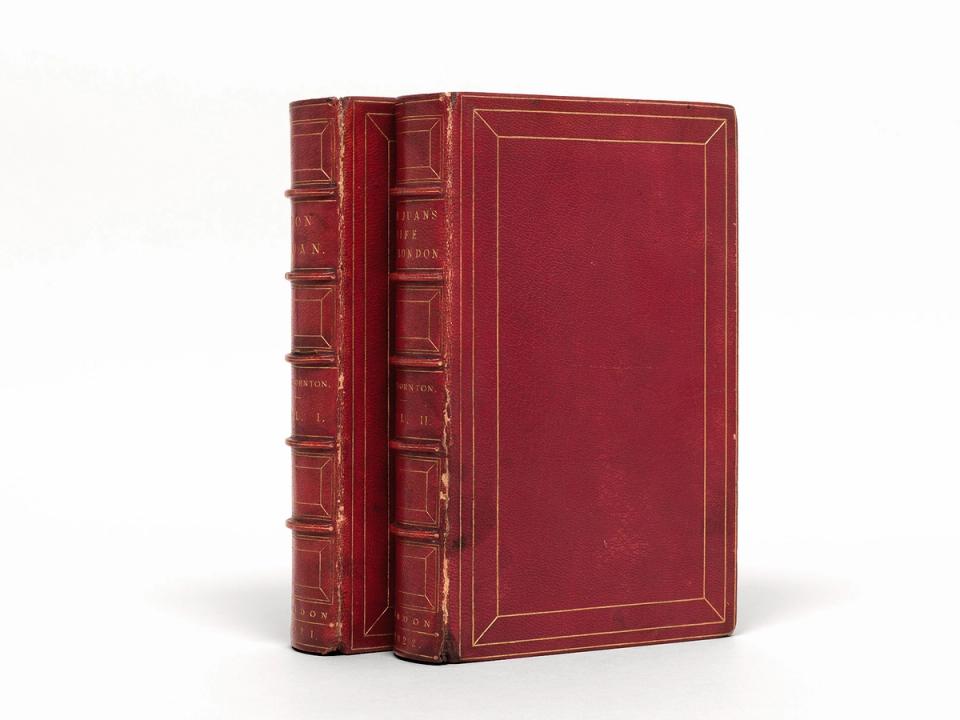


Thornton, Alfred, [Atkinson, J.A.] (ill.)
Don Juan.
Thomas Kelly, London, 1821
An unfiltered perspective on Regency London, rendered exquisitely in aquatints.
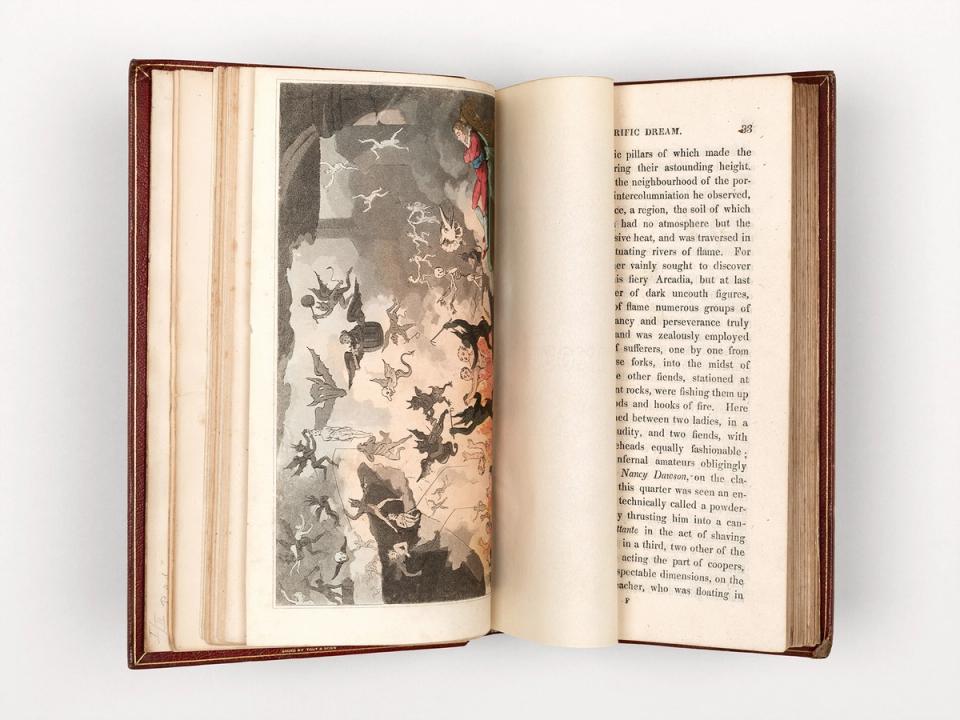
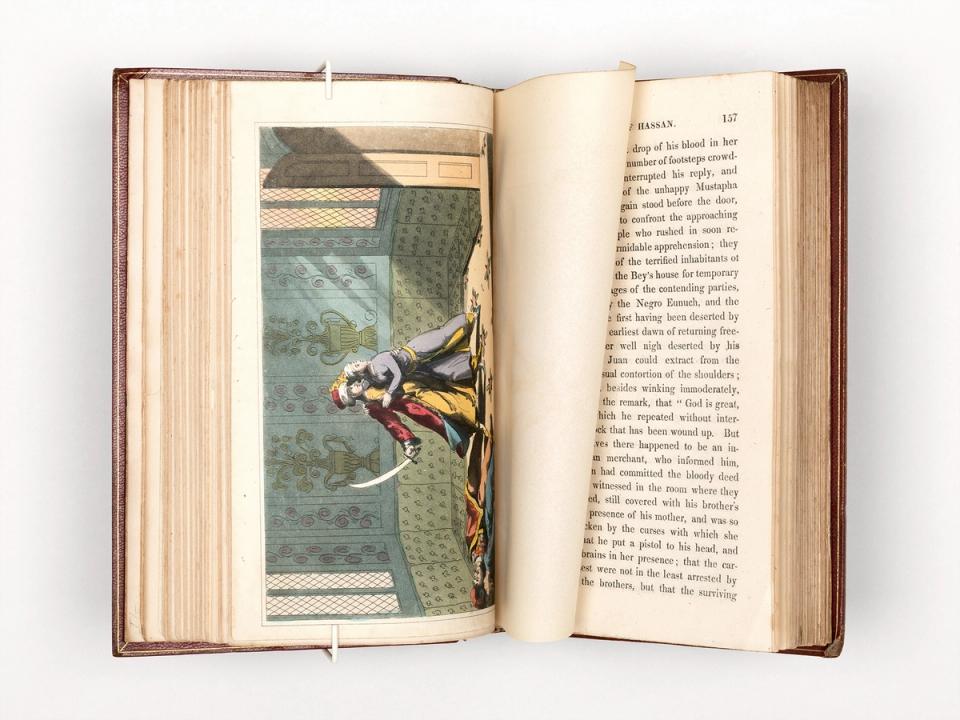
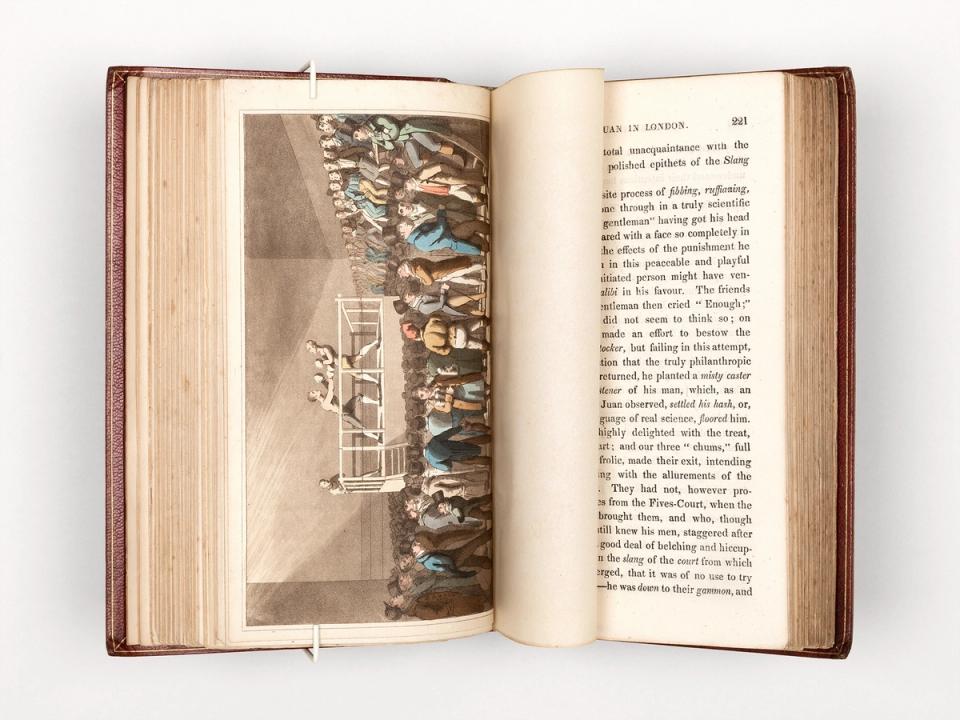
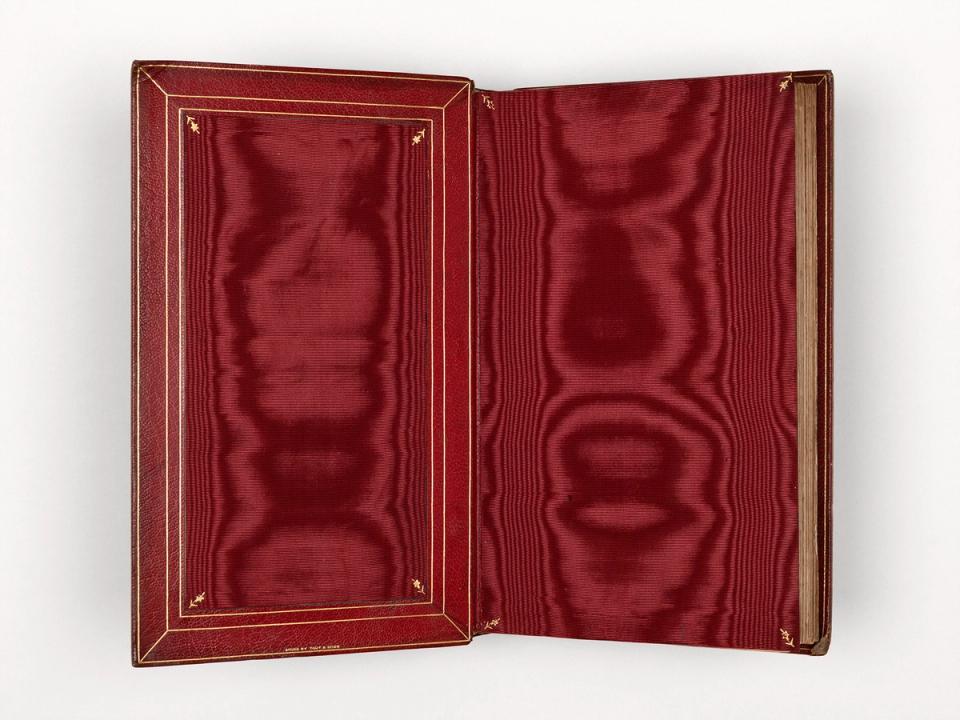
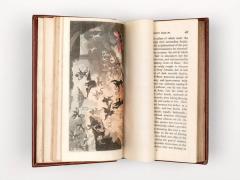
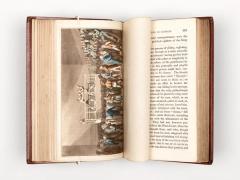
Description: 2 vols., later (c. 1900) red morocco by Tout & Sons, boards filleted in gilt, spine with raised bands, gilt-ruled rectangles in six comparments and gilt lettering. Wide turn-ins, filleted in gilt, red silk pastedowns endpapers and flyleafs. Octavo: 22 × 14 cm; pp. (vol.1): xii, 619, [1]; (vol.2): xi, 660. With 31 hand-colored aquatint plates (incl. frontispieces) by John Augustus Atkinson, under captioned tissue guards. Top edge gilt.
Ref.: Abbey 323; Tooley 486
Provenance: Bookplate of E.H. Hill to 3rd. flyleaf.
Condition: Some minor wear to covers, superficial splits to upper joints. Contents with occasional minor blemish but generally clean. Aquatints in bright colours, with no offsetting.
Notes: In his Don Juan (1821–1822), Alfred Thorton drew on two contemporary publishing successes: the sensational controversy surrounding Lord Byron’s work of the same name and the popularity of illustrated accounts of London life, as seen in Pierce Egan’s Life in London (1821).
First published in 1819, Byron’s poem rekindled interest in the legendary womaniser. However, due to its sexual explicitness, irreverence and attacks on established conventions, it also sparked controversy. By adopting the same title, Thornton was able to leverage the public debates surrounding Byron’s work to boost sales of his own book. He also capitalised on the contemporary fascination with city life. With Life in London, Egan created an influential portrayal of the capital’s diverse social milieus which proved very popular, inspiring imitations as well as theatrical adaptations. Thornton combined the appeal of Byron’s protagonist with Egan’s episodic exploration of urban society, thereby appealing to readers who were already receptive to literary satire and illustrated depictions of contemporary London.
Today, Thornton’s Don Juan is regarded as a vivid primary source for the Regency period. While Lord Byron’s Don Juan remains an integral part of the literary canon, Thornton’s version is valued for its 'unfiltered' insights into the social fabric of the time.
---
Bibliography:
Abbey, J. R.: Life in England in Aquatint and Lithography 1770–1860. Fines Mundi, Saarbrücken, 2016
Tooley, R. V.: English Books with Coloured Plates, 1790 to 1860. B.T. Batsford, London, 1954