Ibsen, Henrik; Rackham, Arthur (ill.)
Peer Gynt. A Dramatic Poem.
George G. Harrap, London, 1936
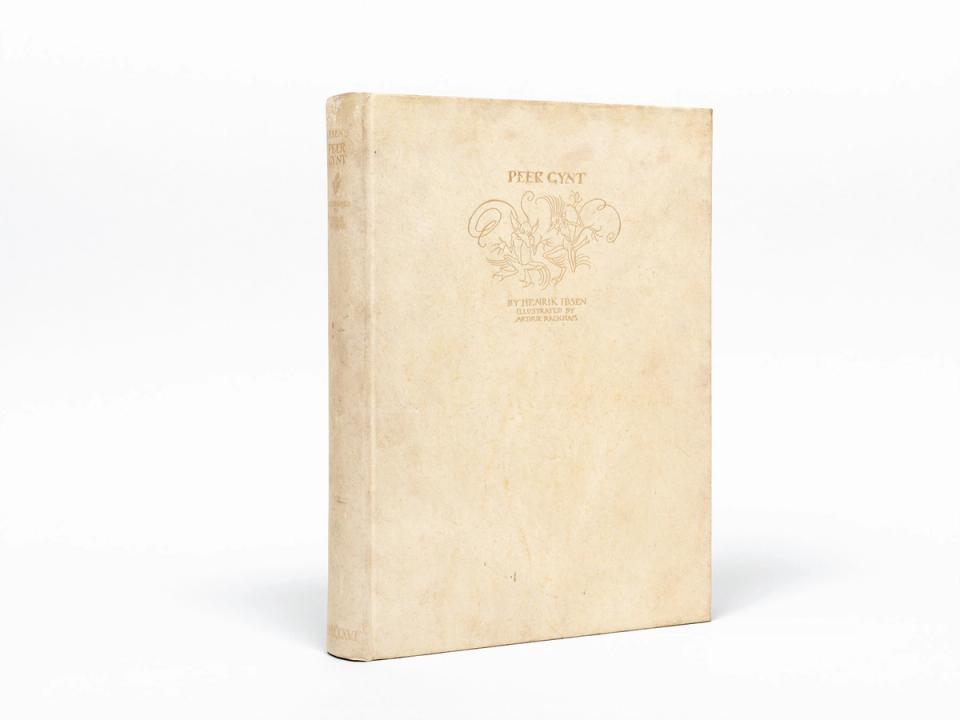
A late work from the Golden Age of Illustration, signed by the artist.
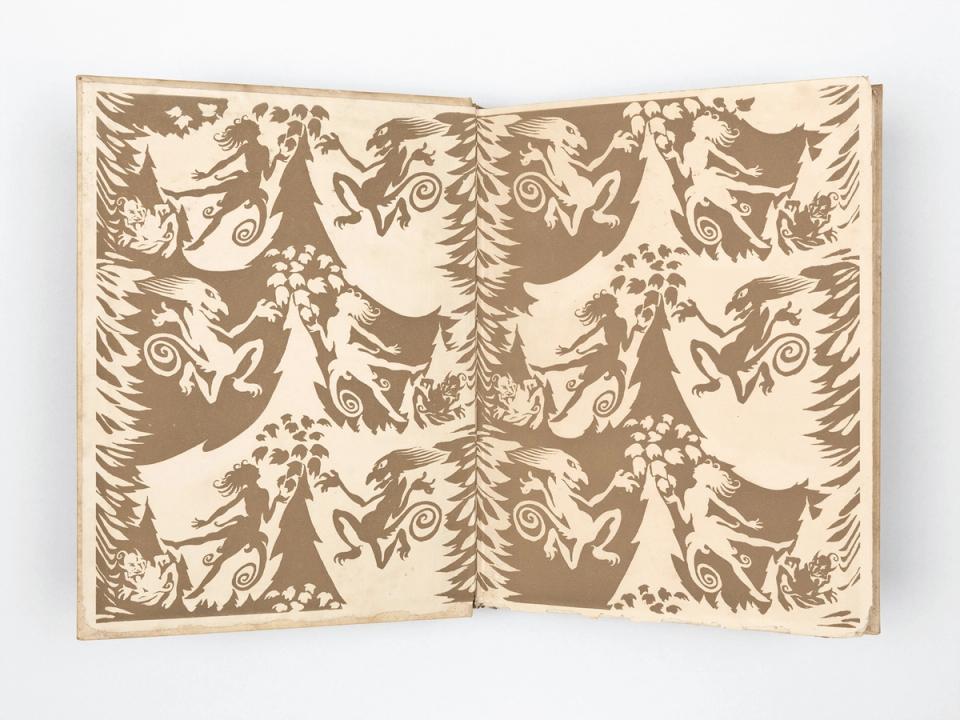
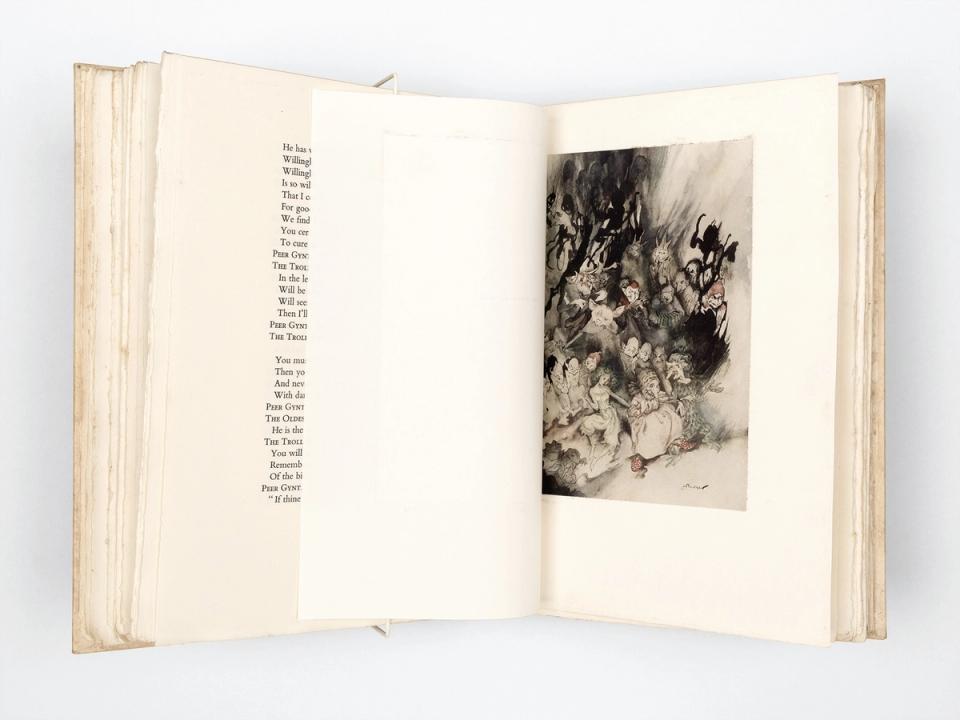
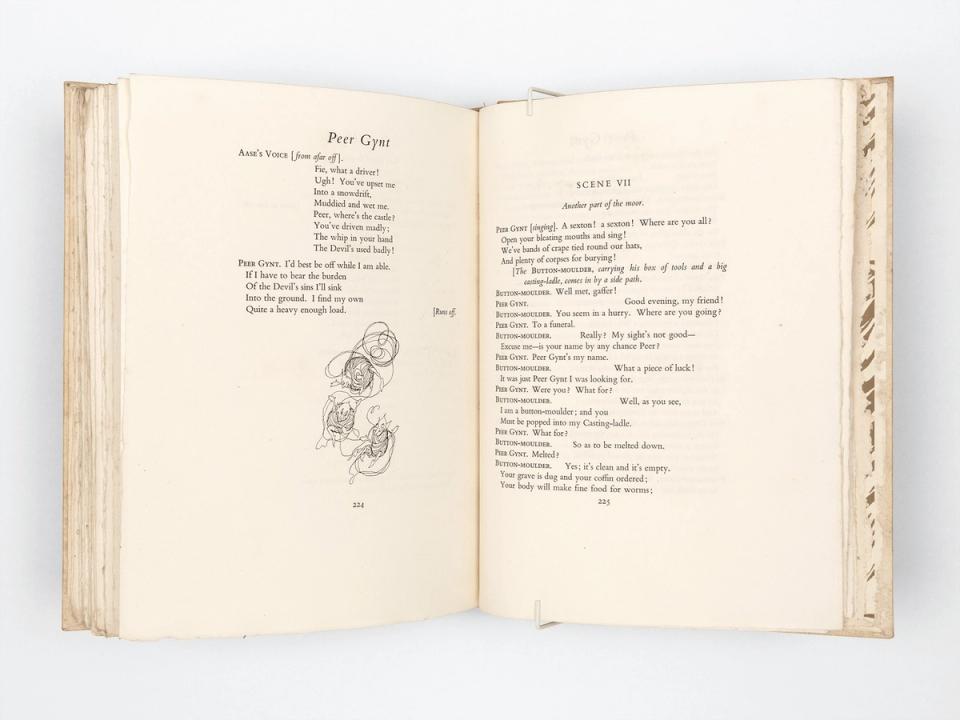
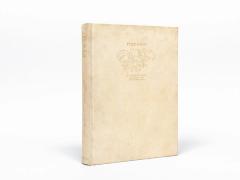
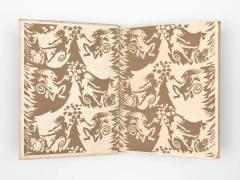
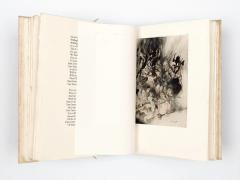
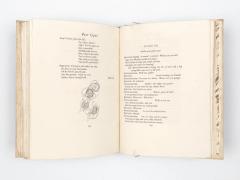
Description: Publisher’s full vellum covered boards with titles and decoration stamped in gilt to front cover and spine. Pictorial endpapers designed by Rackham. Quarto: 27 × 21 cm; pp. [2], 255, [3]. Colour frontispiece (“Peer Gynt and the Herd-Girls”) and 11 colour plates tipped in with captioned tissue guards, numerous black and white in‑text illustrations, head‑ and tail‑pieces. Top edge gilt, others uncut. Signed limited issue, number 65 of 460 copies, signed by Arthur Rackham on the limitation page.
Ref.: Latimore/Haskell p. 74; Riall p. 192
Condition: Cover slightly soiled. Slipcase missing. Contents with occasional minor blemish, otherwise bright and clean. A very good copy.
Notes: Arthur Rackham (1867–1939) was undoubtedly one of the most influential figures in the field of late 19th- and early 20th-century British book illustration. A central figure of the so-called “Golden Age of Illustration”, his name has become synonymous with the lavishly designed books of that era in which text and image come together in harmony. The 1936 edition of Henrik Ibsen’s Peer Gynt, published by Harrap in London, is considered one of the final great book projects of this period and one of Rackham’s last major works. This work thus closes a circle that Rackham helped shape over several decades. He is renowned for his fine pen-and-ink drawings adorned with muted watercolours, often in shades of brown, grey, and green. He typically began with a precise ink drawing, onto which he applied several layers of transparent paint to create a distinctive, slightly melancholic atmosphere. His densely composed images, with their curved contours and deliberately placed empty spaces, guide the viewer’s gaze through the scene in a clearly structured narrative rhythm. In Peer Gynt, this style combines particularly coherently with Ibsen's dramatic text. Rackham’s imagery accentuates both the grotesque humour of the troll world and the quiet pathos of the ageing antihero. In his New Bibliography of Arthur Rackham, Richard Riall observed that Rackham’s portrayal of an elderly Peer Gynt in the final scenes carries a poignant personal resonance, reflecting the artist’s own mortality.
---
Bibliography:
Latimore, S.B., & Haskell, G.C.: Arthur Rackham. A Bibliography. Burt Franklin, New York, 1970
Riall, Richard: Arthur Rackham 1867–1939. A New Bibliography of Arthur Rackham. Ross Press/Mulberry House, Bath, 1994