Röll, Victor Freiherr von
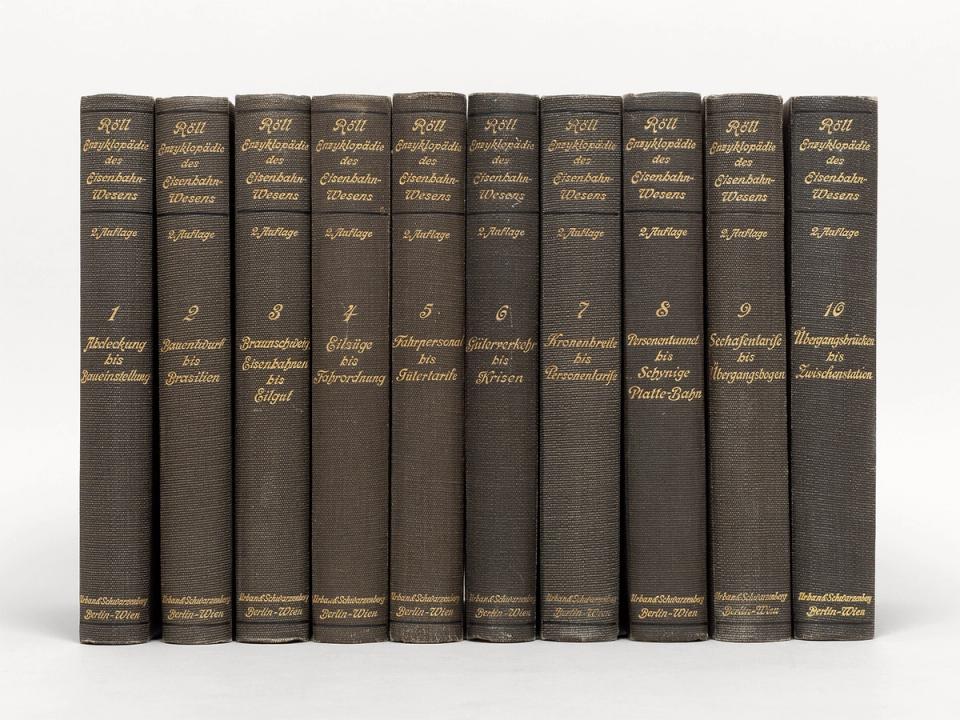
Enzyklopädie des Eisenbahnwesens.
Urban & Schwarzenberg, Berlin/Wien, 1912–23
The Standard Work on Railway Engineering and History, Exceptionally Well Preserved.
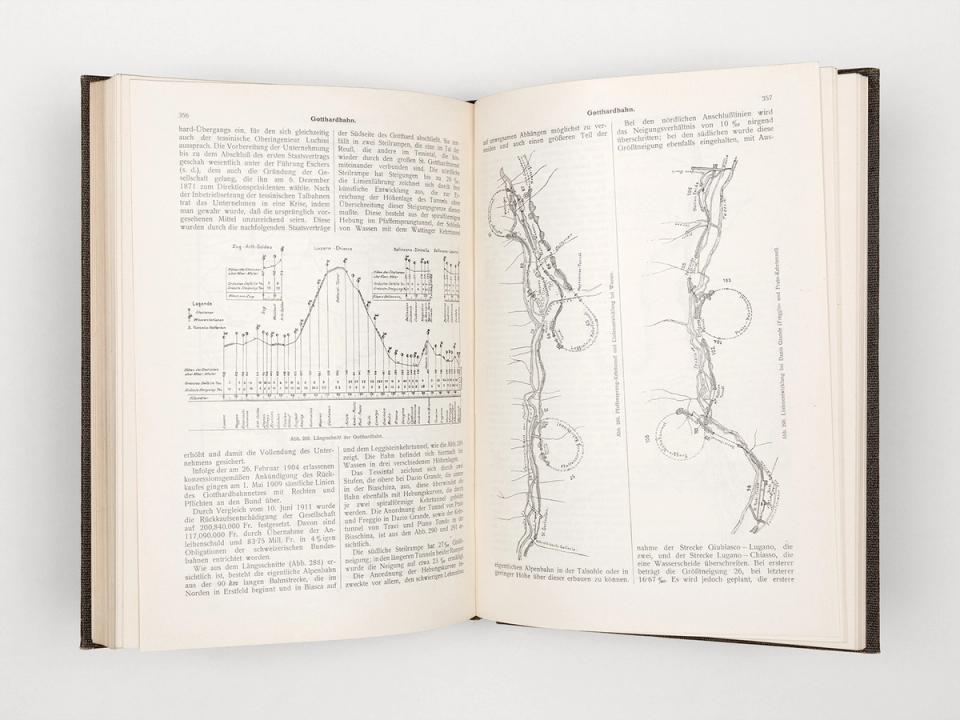
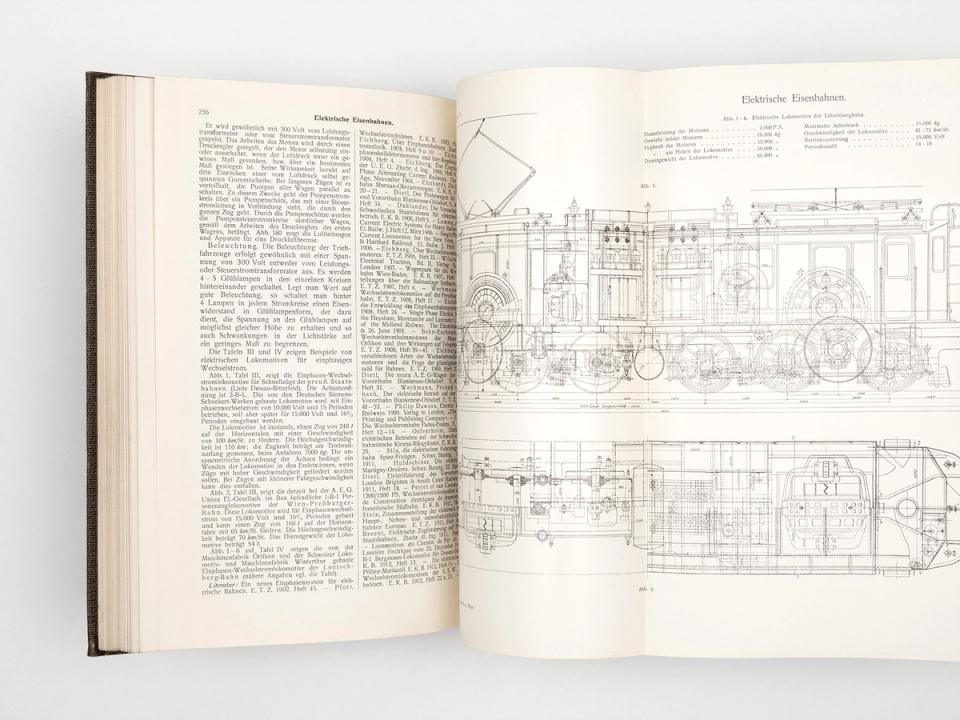
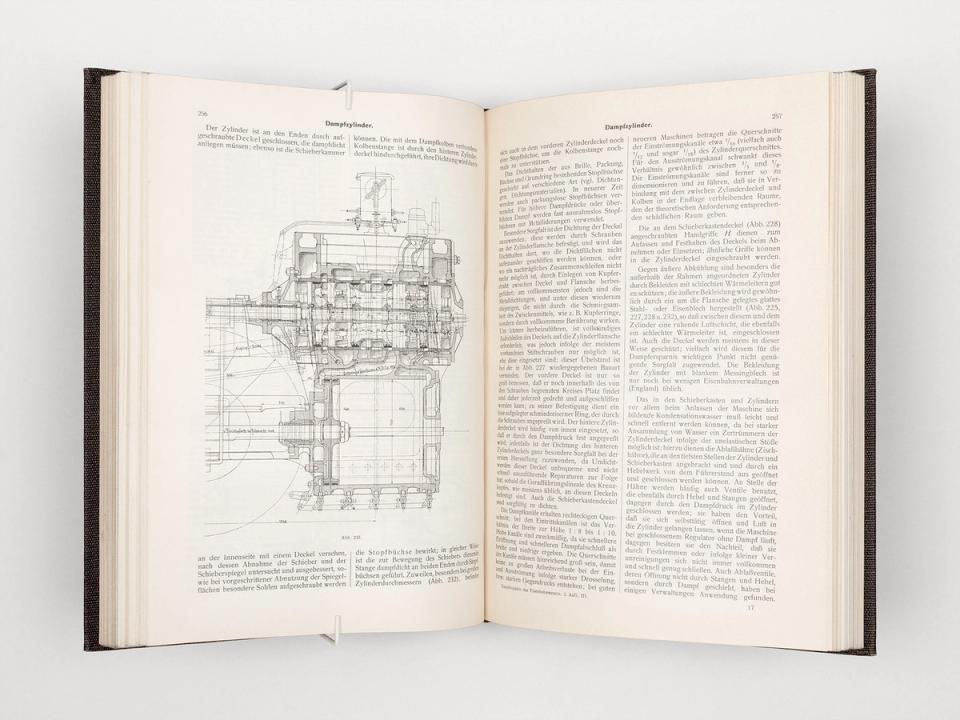
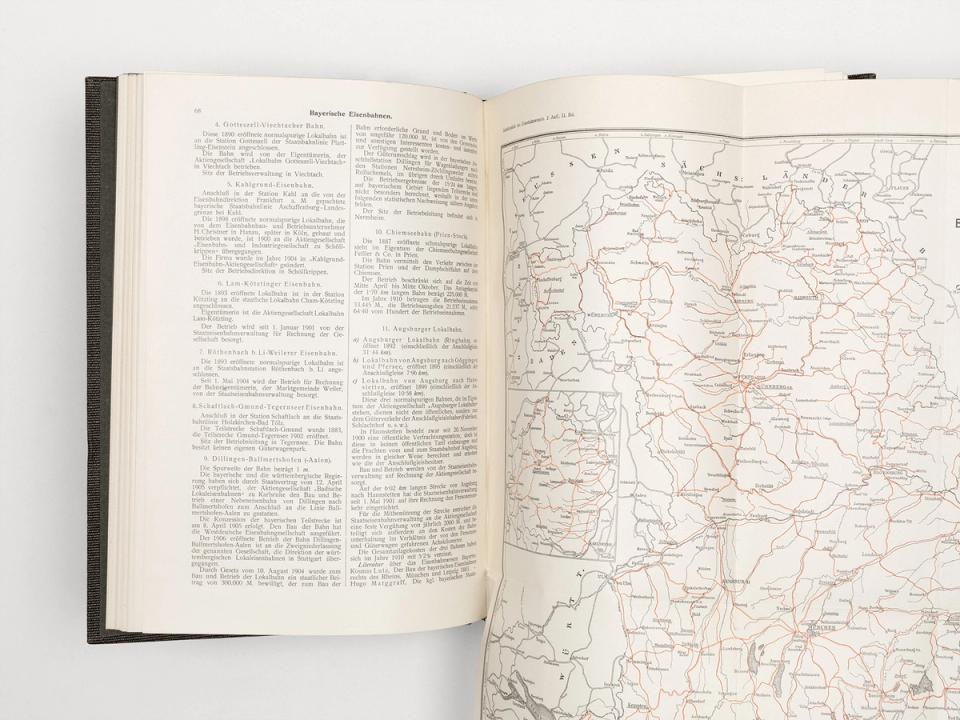
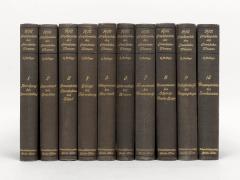
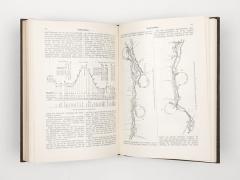
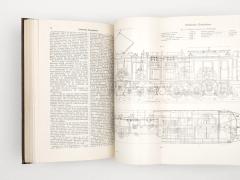
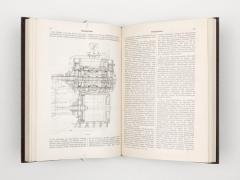
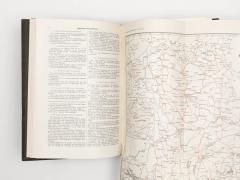
Description: 10 vols., publisher’s green buckram, titled in gilt to spine and upper cover, green endpapers, vols. 1–8 housed in publisher’s card slipcase with paper title label. Quarto: 28 × 20 cm; pp. (vol. 1) viii, 480; (vol. 2) viii, 488; (vol. 3) viii, 496; (vol. 4) viii, 490; (vol. 5) viii, 492; (vol. 6) viii, 484; (vol. 7) viii, 496; (vol. 8) viii, 464; (vol. 9) iii, 444; (vol. 10) xii, 444. Extensively illustrated with numerous black and white plates, maps and illustrations, vol. 7 with the often-missing, loosely inserted route map of the Austrian railways. Top edge stained green.
Condition: Covers show slight signs of wear in places and small dents along the edges. The cardboard slipcases are brittle and fragile along the front edges, but otherwise in good condition. Contents show minor age-toning, else clean and well preserved.
Notes: The ten-volume “Enzyklopädie des Eisenbahnwesens” (Encyclopaedia of Railways) covers all aspects of the railway industry in alphabetical order. Topics include technology (e.g., construction, locomotives, and signaling), operations, administration, legislation, and the history and geography of railways worldwide. Compared to the first edition (1890–1895; seven volumes), the second edition was significantly expanded. Originally planned as an eight-volume set, it was expanded to ten volumes to include new developments and additions. However, the First World War delayed its completion until 1923. As a contemporary work, the encyclopedia reflects the state of the railway industry during a period of rapid technical development. It remains a valuable resource for historians, engineers, and railway enthusiasts to this day.